
Insights from my keynote with The Association for Information and Communication Media
In early April, I was invited to deliver a keynote at the AMIC International Local Journalism Awards in Barcelona, Spain. In its second year, this award recognizes the leading local Catalan language news organizations, as well as those in Europe and internationally.
The Association for Information and Communication Media (AMIC), is a network of more than 600 media reporting in the Catalan region of Spain. AMIC refers to its work, and the awards, as “los medios de proximidad,” directly translated to mean “proximity media.” I love this. Rather than being geographically based, as “local” media suggests, “proximity media” is journalism that gets right up to and touches the lives of those that it serves and represents.
It was inspiring to learn about the incredible work of organizations like Som in the Eastern Valleys of Catalonia, Mesagem in Lisbon, and Agencia Mural in Sao Paolo, and their creative, culturally specific, relevant community engagement to ensure local residents not only have access to accurate information, but that their experiences and perspectives are included and celebrated in news production.
For my talk, I was asked to focus on the relationship between local news and democracy, a request that felt both hugely important and nearly impossible given the current context in the U.S. But there is so much good work being done at the local level, and I chose to focus on “The U.S. Fight for Local News as a Public Good.”
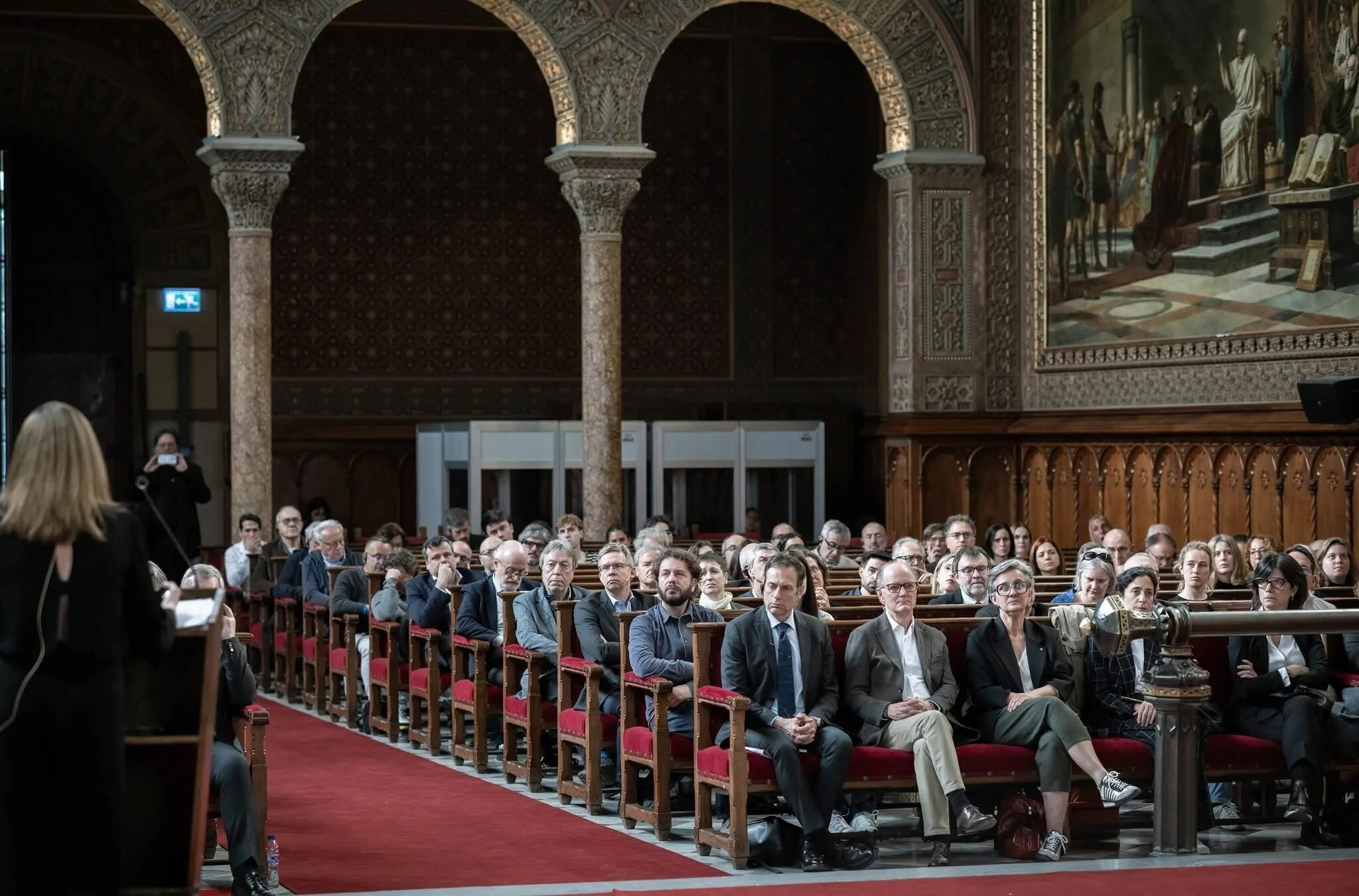
We know that local news is a critical component to ensuring that democracy continues in the U.S., and indeed across the globe. Moreover, because local news is a linchpin for democracy, but one that is not supported by the current market-based business model, we must treat news and information like a public good, the same as the city parks, public schools, state highways, and libraries that are recognized as necessary elements of a thriving society.
My main reflection on the event is that local news organizations that are truly providing a public good share more in common among organizations across country borders than there might be between local and national news organizations within a country — both in terms of challenges and opportunities.
Based on our ecosystem work at Impact Architects, as well as the work of many peers in this space, I define “public good” information as that which has the following characteristics:
-Is created by, for, and with diverse communities
-Is available in preferred languages, formats, and mediums
-Reflects residents’ own lived experience
-Is incentivized to respond to the community it serves, not shareholders
When information providers meet these criteria, they will meet residents’ information needs, fulfilling their public service mission. And over time, there’s lots of evidence that this will contribute to increased levels of civic engagement, both institutional forms like voting and non-institutional forms like social mobilization and volunteering.
There is critical work being done in the local news space in the U.S., and the rich and diverse communities that are civically engaged and fighting to preserve, strengthen, and usher in a truly equitable democracy are not making headlines internationally.
I shared how New Jersey is ahead of the curve (re)defining news and information as a public good. And it has managed to do so in a way that includes and supports not only organizations that are doing capital J journalism, but also organizations deeply rooted in place that are dedicating themselves to providing accurate, relevant, accessible information to their communities through initiatives like the Civic Information Consortium and Hopeloft.
And in a strong information ecosystem in Chicago, through organizations like City Bureau and coalition building among local and hyperlocal information providers, there are promising signs pointing to increased civic engagement among residents. In a recent survey by Civic News Company that we contributed to, we found that 60% of respondents reported engaging in at least one form of civic engagement in the past year.
The overwhelming response I received from the AMIC audience was “thank you for sharing what is happening in the U.S. at the state level and below.” This was as much an eye opener to this international audience that the national headlines do not tell the whole story. Looking ahead, how might we in the U.S. working in local news and information ecosystem space not only more effectively share what we’re learning among ourselves, but also engage with those outside of the U.S. to share wins and learn at scale?