
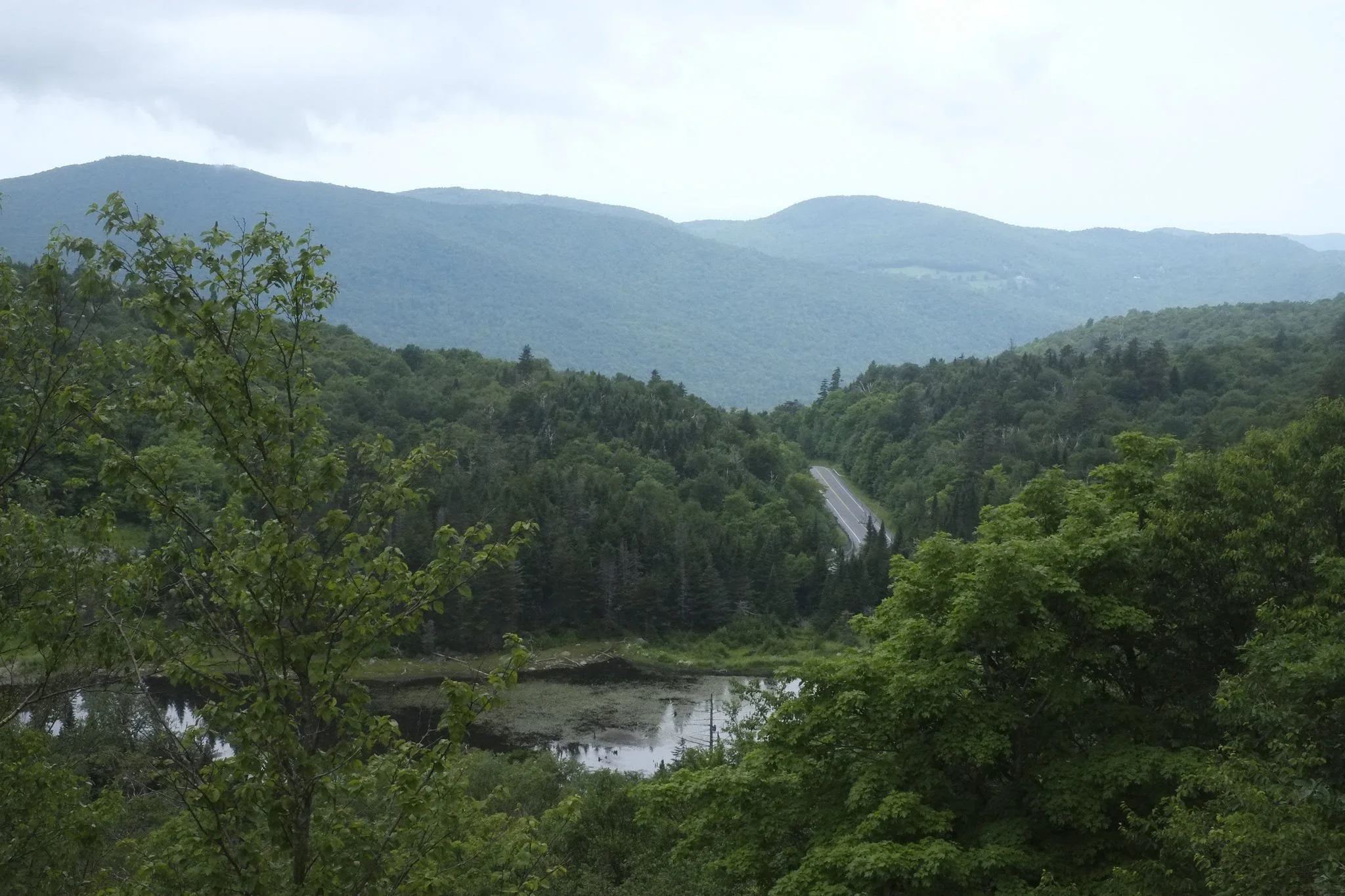
The Appalachian Gap mountain pass in summer.
With more than 60 local news outlets, widespread local ownership, and a number of newsrooms publishing statewide, local, and hyperlocal news for free, Vermont is not a news desert. But while the news ecosystem may appear robust at a glance, stakeholders and residents have growing concerns about the long-term sustainability of many local newsrooms — and by extension, the ability of Vermonters to remain connected to, informed about, and able to fully participate in their communities.
Beginning in summer 2025, Impact Architects (IA) partnered with the Vermont Community Foundation (VCF) to conduct an assessment of the local news and information ecosystem in Vermont as part of the foundation’s efforts as a Press Forward Local chapter. This work brought together IA’s ecosystem framework — which draws on publicly available data sources to develop a baseline understanding of ecosystem context and factors contributing to information access — and qualitative community engagement work.
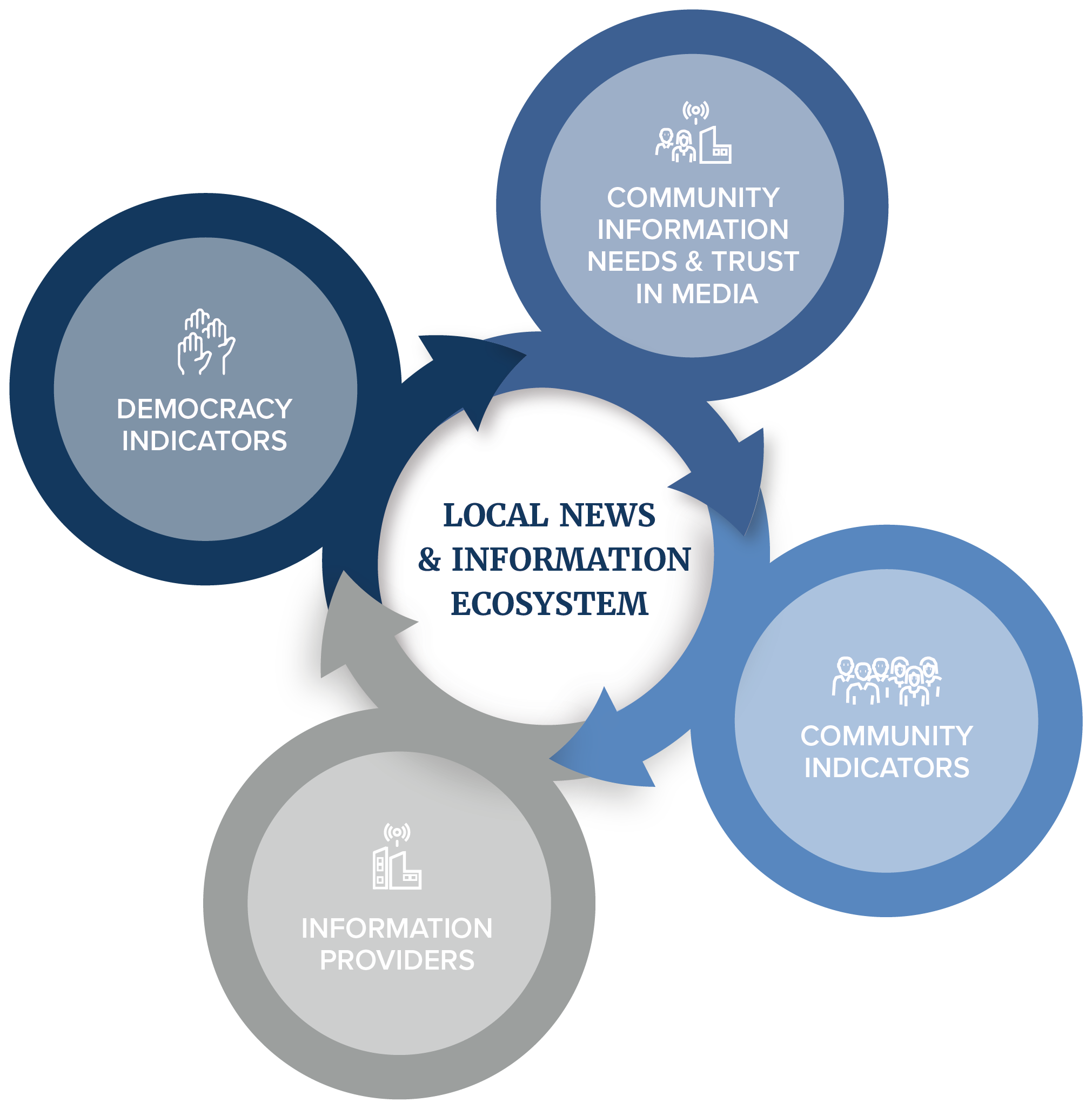
We’ve applied this framework in more than 20 contexts since 2020, including cities, counties, and states across the U.S. As in previous assessments, we produced a widely distributed community survey that allowed us to hear from more than 440 Vermonters across the state about their information needs and access to local news. And we continued to employ focus groups and interviews to speak with community and news-sector leaders in depth about the resources and support needed to create a more robust local news ecosystem. And given the deep partnership with VCF, this project marked a further evolution in our approach, bringing a greater focus on community engagement to help contextualize the local news landscape.
Through a series of nine community listening sessions — led by engagement and facilitation consultant and Vermont resident Krista Siringo — as well as the stakeholder interviews, focus groups, and survey, we were able to hear from residents across the state with a variety of relationships with local news resources.
The community listening sessions held in counties across the state (in person in five different counties, and virtual for three communities) were designed to reach Vermonters who may not already be engaged with or served by traditional local news providers. These conversations, in particular, helped surface the biggest gaps in the news landscape and where communities are underserved. VCF’s network and connections with local organizations and communities were key to reaching such a broad cross section of the state. Through this community engagement effort, paired with quantitative data analysis, we were able to synthesize key opportunities and make recommendations for Vermont’s news ecosystem:
Vermont may not be a news desert, but its news ecosystem infrastructure is fragile.
Relative to its population size, Vermont has a large number of local news outlets — and the majority of those outlets (80%) remain locally owned and operated. As some community papers have closed, local residents have stepped up to fill the gaps, developing innovative solutions to ensure their communities continue to get the information they need. However, stakeholders worry about a lack of succession planning for small, locally owned news outlets as current leadership reaches retirement age. And many told us that the outlets doing the critical work to fill gaps in the landscape are supported by dedicated owners working long hours for little or no pay — a model that is not sustainable in the long term.
Interviewees, listening session participants, and survey respondents alike told us that Vermonters take pride in supporting local — from buying locally grown produce to contributing to local mutual aid efforts after two summers of devastating floods. VCF and the Press Forward Vermont chapter have an opportunity to tap into this culture of local support, inviting Vermonters to participate in building and sustaining news coverage by and for their local communities.
In order to serve all Vermonters and build a strong foundation for years to come, news providers must meet the needs of the state’s changing population.
Listening sessions with youth, immigrant, and refugee communities, in addition to stakeholder interviews with leaders at community organizations, underscored how some Vermonters are not effectively served by existing local news resources. There are no local news outlets in Vermont that consistently publish in languages other than English, and, beyond language barriers, stakeholders highlighted how coverage needs to be in different formats — such as short form video — to reach audiences. Listening session participants shared how a lack of representation, both in terms of newsroom staff and the voices lifted up in coverage, has left many Vermonters who are immigrants, refugees, and people of color feeling that local news coverage is not geared towards them or addressing the topics they most need information about.
To ensure that all Vermonters have the information they need to participate fully in their communities, and to secure the future sustainability of Vermont’s local news ecosystem, it’s critical that outlets build relationships with communities beyond those they have historically reached and served. In many cases, local nonprofits and other community organizations are already serving these communities, providing direct-to-consumer information via email newsletters or WhatsApp groups or putting out in-language content through social media and public access television. There’s an opportunity for traditional news sources to partner with these organizations to ensure vital information is shared with a broader set of Vermonters and to help build trust with communities that have historically felt excluded from coverage.
“A lot of valuable local knowledge about housing, health, education, even civic opportunities, circulates outside of traditional media. If local outlets could build bridges to those informal networks, information would [be] more inclusive.”
- Listening session participant | session for English-speaking refugees
And beyond cross-sector partnerships, fostering collaboration within the local news and information sector can help strengthen local news outlets and help preserve their future sustainability.
It’s clear there’s an appetite for working together to create solutions: Ecosystem stakeholders told us how the culture within the local news ecosystem has shifted in the last several years, becoming less competitive and more collaborative. And there’s already evidence of how editorial collaboration, such as the coverage provided by young reporters through the University of Vermont’s Community News Service or republication agreements from statewide outlets, can help support and sustain local newsrooms throughout the state.
Stakeholders told us how collaboration beyond editorial partnerships and republication, such as revenue and business-side support, would benefit local news outlets. With many local organizations and institutions already providing backbone support to the news ecosystem, and given the recent creation of the Vermont Journalism Coalition, which seeks to support local news outlets across formats and business models, there’s opportunity for and interest in greater coordination across the sector.
These are just a few of the key opportunities we identified through our research — the Vermont News & Information Ecosystem report digs into these and other findings in greater detail, drawing on the perspectives, insights, and experiences of local residents. We hope our research can serve as a baseline measurement of the state of Vermont’s local news ecosystem as local communities work to develop a strategy to support its growth and evolution. We encourage you to explore the report.
One final note: Vermont has a special place in my heart. I spent time there as a student and reported local Vermont news. It’s been a pleasure to participate in this research and learn more about the state that I called home for a few years. I’m hopeful for the work that’s still to come, and I’m excited to see how the local news ecosystem evolves.
